
Inspections
Documented reviews of surface condition, flashing, drainage, penetrations and weather-related wear so property managers can decide with facts.
Commercial
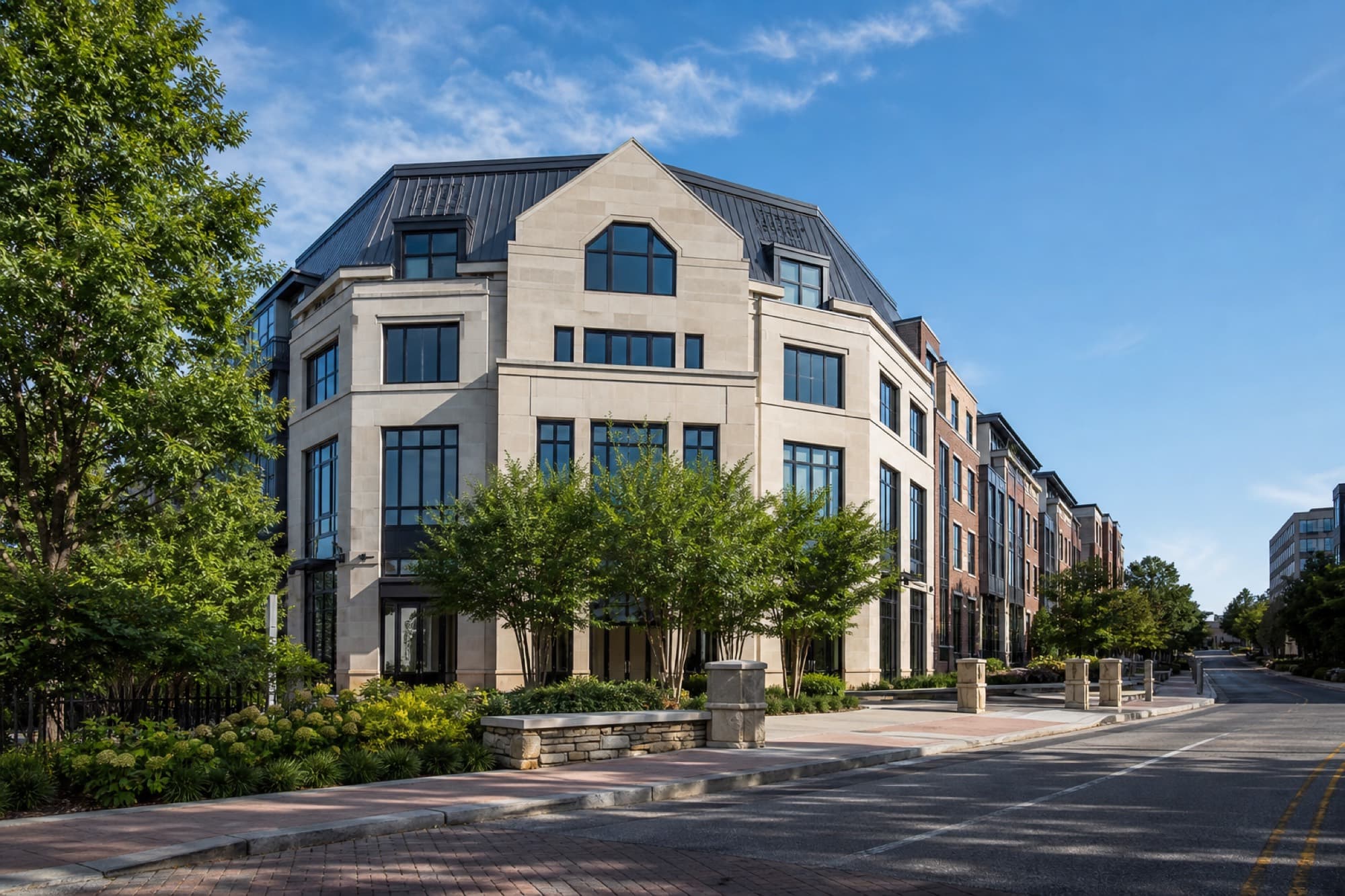
Inspections, repair and replacement for occupied buildings — planned to protect the property and limit disruption to operations.
New Paradigm Projects serves commercial and multi-unit properties across the DMV. Work is mapped around how the building is used: access, occupancy, drainage and the roofing system already in place.
Leaks, failed flashing, unsealed penetrations and weather wear should be evaluated before they interrupt operations or damage the interior. The goal is essential protection with as little impact as possible on staff, residents and daily use of the building.
Documented reviews of surface condition, flashing, drainage, penetrations and weather-related wear so property managers can decide with facts.
Targeted work at leak paths, seals, HVAC and skylight penetrations, and other vulnerable details — before localized issues become interior damage.
When a system is at the end of useful life, replacement is planned around access, safety and building operations.
Hours, access routes, resident notice and crew staging are discussed so the work does not unnecessarily interrupt the people using the building.
Common on pitched commercial and multifamily roofs. Familiar, serviceable, and often the right match when the existing geometry is sloped.
Many commercial buildings shed water differently than a house. Drainage, seams and penetrations matter as much as the membrane itself.
A frequent choice for many low-slope applications. Suitability depends on the building, existing assembly and how the roof is used.
Discussed where the existing assembly calls for it. Layered systems need an on-site look before any recommendation.
Membrane roofs are evaluated for seams, flashing and remaining life — not assumed from a catalog page.
Curbs, units, drains and skylights are common leak points. They are part of a commercial inspection, not extras.
Material recommendations follow the building, not a catalog page. Cedar shake and other specialty coverings are discussed only where they are the appropriate, verified option. Request an inspection so we can evaluate the actual roof before proposing work.
A house usually sheds water down a pitch. Many commercial and multifamily buildings use low-slope or flat assemblies, more penetrations, and roofs that support HVAC equipment. Occupancy, loading docks, resident notice and business hours become part of the plan.
The standard is the same: inspect, explain, then recommend repair or replacement that the building can actually live with.
Interior staining, wet insulation or tenant complaints should trigger a documented look — not a guess from the parking lot.
Water that sits on a low-slope roof stresses seams and flashings.
A roof with no records, many patches or equipment that has been added over time needs a current baseline.
Wind, hail and debris can open membranes and shingles. Temporary protection may be discussed when an opening cannot wait.
Unsealed curbs, valleys and roof openings are everyday leak paths on occupied buildings. They belong in the same evaluation as the field.
Leaks are urgent. Periodic inspection can also find tired seals and drainage problems before they interrupt operations.
Common on smaller commercial buildings and some multifamily structures.
Single-ply white membrane on many low-slope roofs. Seams and penetrations matter.
Layered assemblies where surface and flashing condition drive decisions.
Membrane systems where age, seams and ponding are evaluated together.
Interior stains, tenant complaints and rooftop equipment curbs are traced to paths — not guesses.
Loading areas, resident notice and business hours are part of planning. We do not promise zero disruption.
Property managers or owners submit an inspection with access notes.
Surface, drainage, penetrations, HVAC curbs and flashing are reviewed.
Findings are explained so decisions can be made with facts.
Hours, staging and occupancy are coordinated if work is approved.
Repair or replacement proceeds around the building’s use.
Completed work and remaining questions are confirmed with the client.
Yes. Multi-unit communities are a regular part of commercial work. Coordination around residents is part of planning.
After inspection: sloped asphalt, low-slope and flat assemblies, TPO, built-up and rubber membrane where they fit. Cedar shake only when it is the verified option.
That is the usual condition. We plan access and timing to limit disruption. Specific hours are confirmed per property.
Yes. Leak paths, drainage and penetrations are a core part of a commercial inspection.
Findings may include monitoring or later work. We do not invent service-contract terms on this website.