
Cracked or broken panels
Open faces let water behind the cladding. One broken piece can wet a larger field if the joint is compromised.
Services
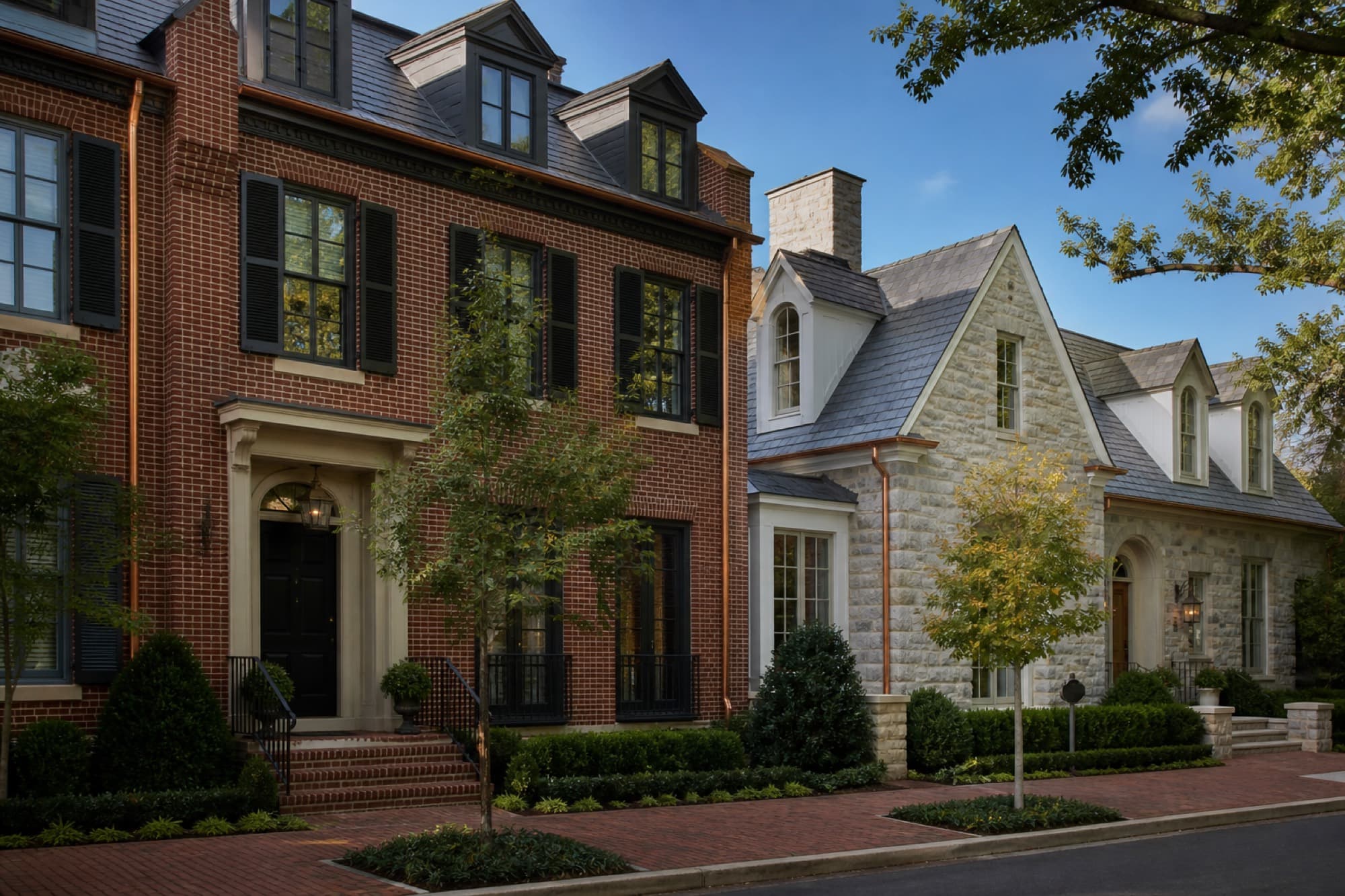
Cladding that protects the wall assembly — weather, moisture, appearance and remaining life, evaluated with the roof.
New Paradigm Projects treats siding as a weather barrier, not only a finish. Panels, trim and joints shed rain, help manage wind-driven moisture and keep sheathing from sitting wet. Failed siding near the roof-to-wall line can undo careful roofing work.
Every house weathers differently. Inspection is how we tell whether a section can be repaired, whether moisture is already in the wall, or whether replacement of a defined area is the honest next step.
Open faces let water behind the cladding. One broken piece can wet a larger field if the joint is compromised.
Movement often points to moisture, fastening or heat. It is a reason to look at the wall, not only paint over the wave.
Color change alone is cosmetic. Failure is when joints open, trim pulls away or the panel no longer sheds water.
Dark streaks, bubbling paint or soft trim at corners and window heads can mean the wall is holding moisture.
The rake, step flashing and soffit line are shared details. Gaps here are envelope problems, not “just siding.”
Drafty rooms along an exterior wall can relate to cladding and air sealing. We do not quote energy-savings percentages.
Common on many DMV homes. Condition of joints, J-channels and fastening matters as much as color.
Heavier claddings need sound fastening and flashing. Paint failure is not the same as a failed wall.
These assemblies fail at joints, flashings and penetrations. Suitability is a property decision — not a catalog pick from this page.
Older marketing mentioned specific siding manufacturers. Those relationships are not republished here until the owner confirms they are current. Recommendations follow the property after inspection.
When panels no longer shed water, joints are open, or the wall assembly is being exposed — not only when color has faded. Inspection decides.
Roof-to-wall joints, rake edges and window heads are shared details. Failed siding can wet the same wall the roof is trying to protect.
Better cladding can support comfort. We do not publish percentage savings.
Open joints, cracked or warped panels, failed trim, staining, insect or moisture clues, and how the cladding meets the roof, windows and grade.
No. Partnerships and certifications from older marketing are not republished until the owner confirms they are current.